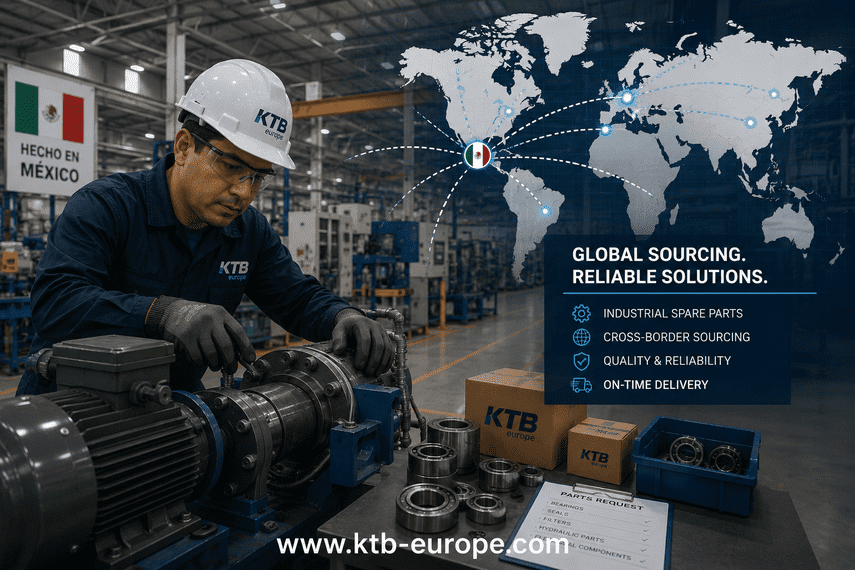
Nearshoring has changed how a lot of manufacturers think about their supply chains, but the conversation tends to focus on production, labor, and logistics. What gets less attention is what happens after a facility is up and running: how does a plant in Mexico actually keep its equipment maintained? That question leads straight into Mexican MRO, a category that looks straightforward from the outside but involves more nuance than most buyers expect when they first move operations south.
This article is for procurement teams and plant managers who are either already operating in Mexico or considering the move, and want a realistic picture of what MRO sourcing looks like once the facility is running, not just while it's being built.
Why Nearshoring Changes the MRO Conversation
When companies relocate or expand manufacturing into Mexico, the early focus is almost always on construction, hiring, and getting production lines operational. Maintenance, repair, and operations sourcing tends to get planned later, sometimes almost as an afterthought, because it doesn't feel urgent until the first piece of equipment needs a part.
That's usually when procurement teams realize the supplier relationships they had back home don't automatically transfer. A bearing supplier in Germany or the U.S. Midwest may not have the same distribution reach into Mexican industrial zones. Lead times that worked in one country don't necessarily apply in another, especially if cross-border shipping and customs processes are now part of the equation.
This is the gap that effective Mexican MRO procurement is meant to address — not just finding parts locally, but building a sourcing strategy that accounts for the realities of operating in a new region.
What Makes Sourcing in Mexico Different
A few structural factors shape how MRO sourcing works differently in Mexico compared to sourcing in Europe or North America.
Mixed supplier landscape.
Mexico has a strong base of local distributors, but availability can vary significantly by region and industry. A facility near established industrial corridors may have more local options than one in a newer manufacturing zone.
Cross-border logistics for harder-to-find parts.
When a needed component isn't available locally, sourcing often shifts to suppliers in the U.S. or further abroad, which reintroduces the customs and shipping complexity that nearshoring was partly meant to reduce.
Equipment origin matters.
Many factories operating in Mexico use machinery manufactured elsewhere — Europe, the U.S., or Asia — which means spare parts sourcing sometimes requires going back to international suppliers rather than relying purely on local Mexican vendors.
Documentation and compliance differences.
Depending on the industry, parts may need specific certifications or import documentation that differs from what a procurement team is used to managing domestically.
None of this means Mexican MRO sourcing is more difficult overall. It just requires a different sourcing strategy than what worked in a buyer's previous location, and assuming otherwise tends to be where delays start.
Common Mistakes Procurement Teams Make During the Transition
A few patterns show up repeatedly when manufacturers move operations into Mexico without adjusting their MRO strategy.
The most common mistake is assuming existing supplier relationships will simply extend into the new facility. A vendor that performed well for years in one country may have no real presence or sourcing capability in Mexico, and discovering this during an actual equipment failure is the worst possible time to find out.
Another frequent issue is underestimating how much equipment in Mexican facilities originates from other regions, which means spare parts sourcing isn't always a local matter. Teams that plan only for domestic Mexican sourcing sometimes get caught off guard when a part needs to come from overseas, adding unexpected lead time to what they assumed would be a quick local fix.
A third mistake is not budgeting time for relationship-building with new regional suppliers before there's an urgent need. Waiting until the first breakdown to start vetting Mexican vendors puts procurement teams in a reactive position instead of a prepared one.
Building a More Resilient Sourcing Approach
Manufacturers who navigate this transition more smoothly tend to start their MRO sourcing planning earlier, often before the facility is even fully operational. They map out which parts are likely to need local sourcing versus international sourcing, and they identify backup suppliers before they're under pressure to find one quickly.
This is where resources focused specifically on industrial procurement and supply chain reliability across multiple regions become useful. Some procurement teams researching this topic turn to dedicated guidance on Mexican MRO procurement and nearshoring success to understand how sourcing strategies need to adapt when operations move across borders, rather than assuming their previous approach will transfer directly.
Treating MRO sourcing as part of the nearshoring plan from the beginning, rather than something to figure out after the fact, tends to reduce the number of surprises that show up once equipment is running and breakdowns inevitably happen.
A Practical Checklist for Teams Sourcing MRO in Mexico
Procurement teams preparing for or already managing operations in Mexico often benefit from working through a short set of questions:
- Which existing suppliers, if any, have real distribution capability in Mexico versus just a sales presence?
- What percentage of installed equipment originates from outside Mexico, and what does that mean for spare parts availability?
- Are there established local distributors near the facility for common maintenance items?
- What is the realistic lead time for parts that need to be sourced internationally rather than locally?
- Has the team identified backup suppliers before an urgent need arises, rather than during one?
Working through these questions early tends to prevent the scramble that happens when a critical part is needed and no clear sourcing path has been established.
FAQs
Is MRO sourcing in Mexico more difficult than in Europe or the U.S.?
It's not necessarily more difficult, but it requires a different approach, since supplier networks, equipment origins, and cross-border logistics work differently than in other regions.
Why do international suppliers still matter for Mexican manufacturing facilities?
Many machines used in Mexican plants are manufactured abroad, so spare parts sourcing sometimes requires going back to the original equipment's region rather than relying solely on local vendors.
When should procurement teams start planning MRO sourcing for a new facility in Mexico?
Ideally before the facility becomes fully operational, since waiting until a breakdown occurs leaves little time to evaluate and select reliable suppliers.
Does nearshoring reduce supply chain complexity for maintenance parts?
It can reduce some logistics challenges, but it introduces new ones related to regional supplier availability, so MRO sourcing still needs its own dedicated strategy.
Final Takeaway
Nearshoring solves a lot of supply chain problems, but it doesn't automatically solve the question of how a facility keeps its equipment running once it's operational. Mexican MRO procurement deserves the same level of planning that goes into construction and staffing, not an afterthought handled once something breaks. Manufacturers who map out their sourcing strategy early, understand where their equipment originates from, and build relationships with the right regional and international suppliers tend to avoid the kind of downtime that catches less prepared teams off guard.