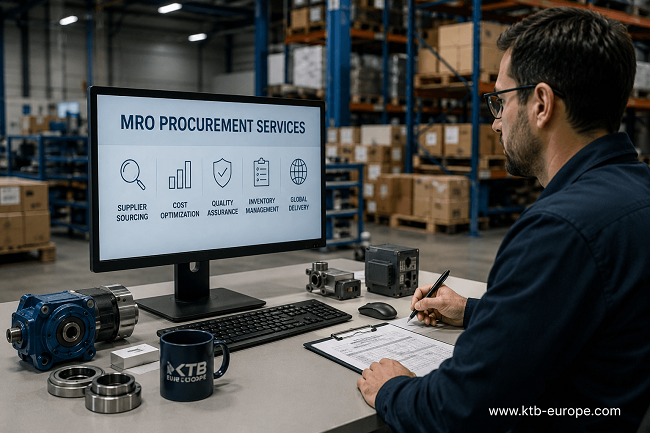
Most procurement teams already know how to buy a bearing, a gasket, or a case of gloves. What they usually don't have in-house is the bandwidth to chase down a discontinued PLC module, verify a cross-reference for a part that's been out of production for six years, or manage an emergency import when a critical spare fails on a Friday afternoon. That gap is where mro procurement services actually earn their place—not as a replacement for internal purchasing, but as support for the categories that internal teams are least equipped to handle quickly. The term gets used loosely. Some MRO procurement services are essentially order-fulfillment operations with a bigger catalog. Others function closer to a technical sourcing arm—verifying part compatibility, tracking down obsolete components, managing international logistics, and handling the documentation that regulated industries require. The difference matters more than most buyers realize until they're relying on the wrong kind of service during an actual emergency.
What internal procurement teams are usually good at
Internal purchasing teams handle routine replenishment well. They know their volume suppliers, they have negotiated pricing, and they understand their plant's consumption patterns. This works because routine MRO spend is predictable—the same fasteners, the same filters, the same consumables, ordered on a schedule. Where internal teams typically struggle isn't competence, it's scope. A purchasing department sized for routine replenishment usually doesn't have the bandwidth to maintain relationships with international automation suppliers, track cross-references for legacy equipment, or manage the customs and logistics work that comes with sourcing an obsolete part from overseas. That's not a criticism—it's a resourcing reality. Building that capability in-house rarely makes sense for a single plant's spend volume.
Where procurement services genuinely add value
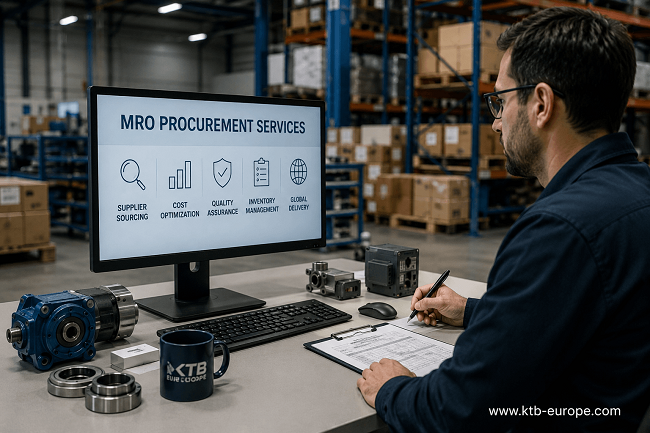
The categories where outside procurement support tends to matter most are fairly consistent across industries:
- Sourcing discontinued or legacy components where the OEM no longer stocks the part and cross-references aren't obvious
- Verifying technical compatibility for automation and control components, including revision-level matching
- Managing international sourcing and logistics for parts that aren't available domestically within an acceptable timeframe
- Handling emergency procurement outside normal quoting cycles, when a line is down and speed matters more than process
- Consolidating supplier documentation for traceability on regulated equipment
None of this replaces the plant's own technical judgment about what a component needs to do. Engineering and maintenance still decide whether an aftermarket alternative is acceptable, or whether a component must be OEM-original for warranty or safety reasons. What a good procurement service adds is the sourcing reach and technical verification to execute that decision quickly, rather than leaving maintenance to search manufacturer websites and cold-call distributors during a shutdown.
The trade-off worth understanding
Bringing in outside procurement support for critical spares isn't free, and it shouldn't be treated as a blanket replacement for direct OEM relationships or existing domestic suppliers. The value case is narrower and more specific: for the smaller category of parts that are hard to source, technically ambiguous, or time-critical, the cost of outside sourcing support is usually far smaller than the cost of extended downtime while an internal team works the problem cold. This is also where total cost of ownership matters more than unit price. A procurement service that charges a premium on a single obsolete part but gets it verified and shipped in days is often the cheaper outcome once downtime is factored in, compared to a lower-cost internal search that takes three weeks to land on the right component.
A realistic scenario
A food processing plant has a conveyor control system built around a drive that was discontinued years ago. When it finally fails, the internal purchasing team spends two days confirming the OEM no longer makes it, then starts searching for alternatives without much technical basis for comparison. A procurement service with automation sourcing experience can usually shortcut that process—cross-referencing the exact specifications against qualified equivalents, checking international stock for remaining OEM units, and presenting the plant's engineering team with verified options instead of a list of maybes. The plant still makes the final call. The service just makes that call faster and better-informed.
What to ask before engaging a procurement service
A few questions tend to separate genuinely MRO procurement services from ones that just resell inventory:
- Do they verify technical compatibility, or just match part descriptions?
- Do they have real international sourcing reach, or primarily domestic stock?
- How do they handle emergency requests outside standard quoting timelines?
- Can they provide documentation suitable for regulated or safety-critical equipment?
- Do they work alongside existing OEM and domestic supplier relationships, or expect to replace them entirely?
The right answer to that last question is usually "alongside." A procurement service that positions itself as a full replacement for existing supplier relationships is often overstating what it can realistically cover.
The takeaway
MRO procurement services are most useful when applied narrowly, to the categories internal teams struggle with by nature of scope, not competence: legacy components, technical verification for automation parts, and international sourcing under time pressure. Used that way, they reduce downtime exposure without displacing the supplier relationships and internal judgment that already work well for routine purchasing.
FAQ
1. Are MRO procurement services worth it for a plant that already has an internal purchasing team?
Usually yes, for a specific slice of spend—legacy components, technical sourcing, and international procurement—rather than as a replacement for routine purchasing, which internal teams typically handle well already.
2. What's the difference between an MRO distributor and MRO procurement services?
A distributor generally sells from its own inventory or supplier network. Procurement services often go further, handling technical verification, sourcing for discontinued parts, and logistics management on the plant's behalf.
3. Can MRO procurement services help with obsolete or discontinued automation components?
Yes, this is one of the categories where outside sourcing support adds the most value, since it requires cross-referencing specifications and searching remaining OEM stock or qualified alternatives—work most internal teams aren't set up to do quickly.
4. Do MRO procurement services replace direct OEM relationships?
They shouldn't, and a reputable service won't position itself that way. They typically work alongside existing OEM and domestic supplier relationships, filling gaps for harder-to-source or time-critical components.
5. How do you evaluate whether an MRO procurement service is technically capable, not just a reseller?
Ask how they verify part compatibility, whether they have real international sourcing reach, and how they handle emergency requests. A service that only matches catalog descriptions without technical verification isn't offering much beyond standard distribution.