Ask ten plant managers what MRO services means to their operation, and you'll get ten slightly different answers. To a maintenance manager, it's about having the right bearing on the shelf at 2 a.m. To a procurement manager, it's about supplier reliability, cost control, and not getting burned by a six-month lead time on a part that used to ship in a week. To a plant manager, it's the invisible layer that either keeps production running or turns into the reason a line sat idle for three shifts.
All of them are right. MRO services — maintenance, repair, and operations — cover everything from spare parts sourcing to inventory strategy to supplier qualification, and the quality of those services shows up directly in uptime numbers. After years of sitting across the table from procurement teams and maintenance leads in automotive, food processing, pharmaceutical, and packaging plants, I've noticed the conversation almost always comes back to the same handful of decisions. This article walks through them the way I'd walk through them with a client — not as theory, but as the practical calls that separate plants that run smoothly from plants that are constantly firefighting.
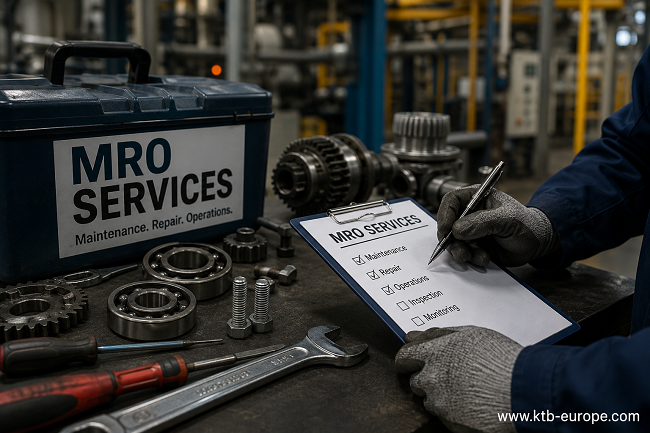
Why MRO Services Deserve More Strategic Attention Than They Usually Get
Most plants treat MRO as a cost center to be minimized rather than a reliability function to be managed. That's backwards, and it's the root cause of a lot of avoidable downtime.
Here's a scenario I've seen more times than I can count: a production line goes down because a single PLC module — maybe an obsolete Siemens or Allen-Bradley card — has failed, and nobody kept a spare. The part isn't expensive. It's the lead time that hurts. If it's still in production, you might get it in two to four weeks. If it's been discontinued, you're now hunting through OEM back channels or aftermarket suppliers, and the line stays down while procurement scrambles. I've watched a single unavailable automation component cost a plant more in lost production than a decade's worth of carrying that part in inventory would have cost.
This is the core tension in MRO services: the parts that fail least often are frequently the ones that cause the most damage when they do fail, because nobody planned for them. A worn conveyor bearing is annoying but manageable — you know it wears, you stock it, you replace it on schedule. A specialized drive controller that fails once every eight years is a different animal entirely. It's not on anyone's radar until it's the only thing standing between you and a running line.
Good MRO services address this by shifting the mindset from "what do we use most often" to "what would hurt us most if it failed and wasn't available." That distinction drives everything downstream — inventory planning, supplier qualification, and how you think about OEM versus aftermarket sourcing.
Inventory Planning: Criticality Over Convenience
I've reviewed a lot of MRO inventory lists over the years, and the same pattern shows up constantly: high stock levels on cheap, easy-to-source consumables, and thin or nonexistent coverage on the components that actually drive risk. It's an easy trap to fall into, because stocking common items feels productive and doesn't require difficult conversations with finance.
The better approach — and one I push clients toward — is a criticality-based inventory model. Rank parts not by cost or usage frequency, but by the production impact of their unavailability, multiplied by realistic lead time. A $200 sensor with a 16-week lead time and no substitute can be more critical than a $5,000 pump you can get from three regional distributors within 48 hours. Pharmaceutical and food processing plants tend to get this faster than others, mostly because regulatory downtime costs are so visible. Oil & gas and chemical operations, where a single valve actuator failure can shut down an entire process train, learn it the hard way if they haven't already.
Supplier Qualification Isn't a One-Time Task
Supplier qualification gets treated as a box to check during onboarding, then forgotten. That's a mistake, especially for components tied to industrial automation, where OEM lead times have stretched considerably over the past several years for certain product lines.
I've worked with manufacturing engineers who assumed their OEM relationship guaranteed availability, only to find themselves quoted a lead time that made emergency sourcing look attractive by comparison. That's usually the moment a plant starts seriously qualifying a second or third supplier — reactively, under pressure, with a line already down. It's far better to do that qualification work before the crisis: vetting aftermarket suppliers for genuine part traceability, confirming certifications where they matter (aerospace and pharma environments especially), and understanding which suppliers can actually support obsolete or discontinued components versus which ones just claim to.
OEM vs. Aftermarket: A Decision, Not a Default
This comes up in nearly every consulting conversation I have. Plants often default to OEM parts out of habit or warranty concerns, without weighing the actual tradeoffs. OEM parts typically offer certainty on fit and specification, which matters enormously in regulated environments like pharmaceutical manufacturing or aerospace component production, where documentation and traceability aren't optional.
But aftermarket and reputable third-party suppliers often solve the two biggest MRO headaches: lead time and obsolescence. When an OEM discontinues a component — which happens regularly with older automation hardware — a qualified aftermarket source may be the only realistic path to keeping equipment running without a full retrofit. The decision shouldn't be OEM-always or aftermarket-always. It should be evaluated part by part, weighing criticality, regulatory requirements, and how replaceable the component actually is.
Planned Maintenance vs. Emergency Sourcing
The clearest sign of a mature MRO program is the ratio of planned procurement to emergency procurement. Emergency sourcing is expensive — not just in expedited shipping and premium pricing, but in the internal hours spent chasing quotes, verifying compatibility under time pressure, and explaining to operations why the line is still down.
Plants with strong reliability programs — condition monitoring, scheduled component replacement, documented failure histories — convert most of their MRO spend into planned procurement. That means better pricing, better lead-time management, and fewer 2 a.m. phone calls. Packaging and energy operations, where equipment often runs continuously with little slack for unplanned stops, tend to invest heavily here because the cost of emergency downtime is so direct and measurable.
Emergency sourcing will never disappear entirely — equipment fails in ways you can't always predict. But when it becomes the default mode of operation rather than the exception, that's usually a sign the inventory strategy and supplier network need a serious look.
Conclusion
MRO services aren't just about keeping a shelf stocked or having a vendor on speed dial. They're a reliability function that touches inventory strategy, supplier relationships, sourcing decisions, and how a plant handles the gap between OEM availability and real-world lead times. The plants that manage this well aren't necessarily spending more — they're spending more deliberately, based on criticality rather than convenience. Whether you're managing automotive tooling, pharmaceutical-grade components, or automation hardware on an aging production line, the underlying discipline is the same: know what actually puts your operation at risk, and build your sourcing and inventory decisions around that, not around habit.
FAQ
1. What exactly do MRO services include?
MRO services cover the sourcing, supply, and management of maintenance, repair, and operations items — spare parts, automation components, consumables, and the supplier relationships and inventory planning that keep them available when equipment needs them.
2. How is MRO procurement different from standard production procurement?
Production procurement typically follows predictable demand tied to output schedules. MRO procurement deals with irregular, often unpredictable failure-driven demand, which is why inventory planning and supplier responsiveness matter more than volume pricing alone.
3. Should we always buy OEM parts for critical equipment?
Not necessarily. OEM parts offer certainty on specification and are often required in regulated industries, but aftermarket or qualified third-party sources frequently solve lead-time and obsolescence problems that OEMs can't, especially for discontinued components.
4. How do we decide which spare parts to stock versus source on demand?
Rank parts by criticality — the production impact of unavailability combined with realistic lead time — rather than by cost or usage frequency. Low-cost, long-lead-time parts with no substitute often deserve stock even if they're rarely used.
5. What's the biggest mistake plants make with MRO inventory?
Overstocking cheap, easy-to-source consumables while leaving low-frequency, high-impact components — like specialized automation parts — unstocked and unplanned for, which is exactly when emergency sourcing and unplanned downtime happen.