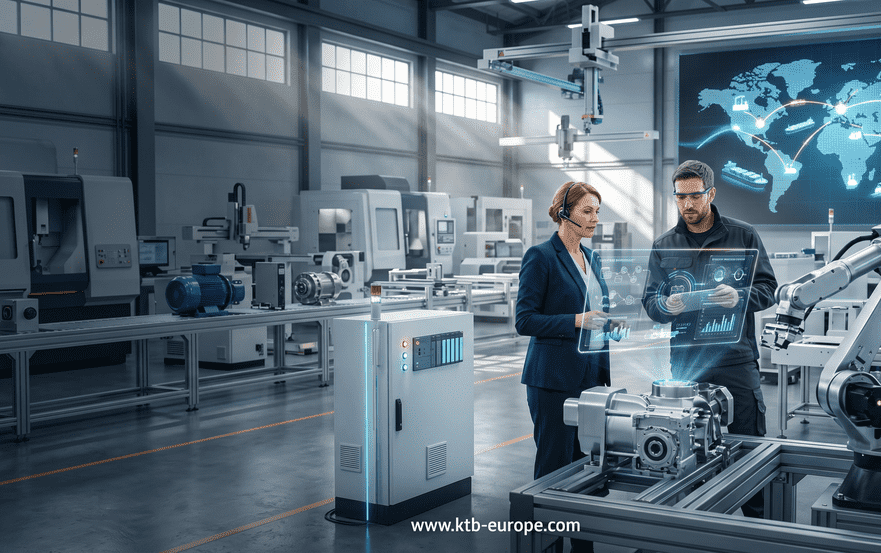
When professionals search for an MRO distributor, they are often presented with results that relate to aviation maintenance or software platforms. This guide focuses on Industrial Maintenance, Repair, and Operations (MRO) specifically the procurement of industrial automation components, mechanical machinery parts, electrical equipment, process control systems, and engineering solutions that keep manufacturing facilities operating at peak performance.
For today's procurement leaders, selecting the right MRO distributor extends far beyond locating replacement parts. The right partner strengthens supply chain resilience, improves equipment availability, simplifies global sourcing, and helps manufacturing organizations maintain uninterrupted production in an increasingly interconnected industrial landscape.
As production assets become more technologically advanced and globally sourced, industrial procurement must evolve from transactional purchasing into a coordinated strategy built around long-term operational continuity.
The Strategic Role of the Modern MRO Distributor
An industrial MRO distributor is a strategic procurement partner that connects manufacturers with the maintenance, repair, and operational resources required to sustain reliable industrial performance.
Modern manufacturing depends on thousands of interconnected components working together across automation systems, electrical infrastructure, mechanical assemblies, hydraulic equipment, motion control technologies, and industrial instrumentation.
An effective MRO distributor does far more than process purchase orders.
The strongest partners actively support operational stability by helping procurement teams:
- Reduce sourcing complexity
- Improve spare parts availability
- Strengthen inventory planning
- Coordinate international procurement
- Support long-term maintenance strategies
Rather than reacting to equipment failures after they occur, strategic distributors help manufacturers create procurement frameworks designed to minimize operational disruption before problems arise.
Sourcing Challenges in the International Procurement Pipeline
Industrial manufacturing has become increasingly global.
Production facilities frequently operate machinery developed across multiple engineering regions, requiring procurement teams to coordinate sourcing activities through diverse manufacturer networks.
Without an integrated procurement strategy, maintaining these complex industrial environments becomes significantly more challenging.
Eliminating Unexpected Machinery Downtime
Unexpected downtime occurs when critical equipment becomes unavailable because essential replacement components cannot be sourced efficiently.
Industrial operations rely on precise coordination between mechanical equipment, automation systems, industrial controls, electrical components, and process technologies.
When a specialized sensor, industrial drive, gearbox, hydraulic assembly, or automation controller becomes unavailable, production schedules can quickly become vulnerable.
Leading procurement organizations reduce downtime exposure by emphasizing:
- Responsive sourcing strategies
- Reliable supplier relationships
- Efficient component identification
- Proactive maintenance planning
- Flexible procurement pathways
Preparation consistently delivers greater operational stability than emergency purchasing.
Securing Component Authenticity and OEM Quality
Authentic industrial components preserve equipment reliability, engineering integrity, and predictable maintenance performance.
Every industrial machine is designed around carefully engineered specifications.
Using components with uncertain origin or inconsistent manufacturing quality introduces unnecessary operational uncertainty and may complicate future maintenance efforts.
Professional procurement strategies prioritize sourcing channels that emphasize:
- Original manufacturer quality
- Verified engineering compatibility
- Reliable component traceability
- Consistent technical performance
- Trusted industrial supply partnerships
Maintaining equipment with components aligned to original engineering expectations supports long-term manufacturing reliability.
Streamlining Transatlantic Procurement Complexity
Global procurement complexity increases when organizations coordinate sourcing across multiple engineering brands, distribution channels, and international business environments.
Procurement professionals often manage supplier communication spanning numerous manufacturers, technical documentation systems, and geographically distributed engineering teams.
Without centralized procurement coordination, administrative effort can consume valuable operational resources.
Integrated sourcing strategies simplify this environment by improving:
- Supplier collaboration
- Technical communication
- Component sourcing visibility
- Procurement efficiency
- Cross-border coordination
Reducing procurement complexity allows maintenance organizations to focus on production performance rather than fragmented supplier management.
The Technical Bridge: Connecting Global Industry with Leading Supply Networks
Global manufacturing depends on procurement strategies capable of reaching original engineering ecosystems wherever specialized equipment is produced.
Industrial machinery rarely originates from a single region.
Automation technologies, motion control systems, electrical equipment, hydraulic components, precision mechanics, and industrial instrumentation are frequently developed by manufacturers operating across internationally recognized engineering centers.
Organizations that establish direct access to these production ecosystems gain important strategic advantages:
- Broader access to specialized industrial components
- Closer alignment with original engineering specifications
- Greater sourcing flexibility
- Improved procurement responsiveness
- Enhanced supply chain resilience
Rather than relying exclusively on fragmented local distribution networks, leading procurement teams build sourcing infrastructures that connect manufacturing facilities directly with global industrial supply channels.
Synchronizing Supply Infrastructure Across Borders
Industrial procurement increasingly requires a coordinated international approach capable of supporting sophisticated manufacturing operations across diverse supplier ecosystems.
This is where globally connected procurement infrastructure becomes a competitive advantage.
Rather than navigating isolated supplier relationships independently, manufacturing organizations benefit from procurement partners that synchronize communication, sourcing activities, and international engineering access through a unified procurement strategy.
For industrial facilities seeking to strengthen international sourcing capabilities, exploring trusted MRO companies in the USA and how KTB Europe is building the global bridge provides valuable insight into how modern procurement organizations eliminate cross-border sourcing friction while maintaining dependable access to specialized industrial automation and engineering supply networks.
This globally synchronized approach enables procurement teams to improve operational continuity, strengthen supplier collaboration, and support increasingly sophisticated manufacturing environments.
Cultivating Supply Chain Resilience for Sustainable Output
Supply chain resilience is the ability to maintain dependable manufacturing performance despite changing sourcing conditions and evolving operational requirements.
Industrial procurement has become an essential contributor to manufacturing competitiveness.
Organizations build stronger procurement ecosystems by combining:
- Local operational expertise
- Global sourcing connectivity
- Technical procurement knowledge
- Collaborative supplier relationships
- Strategic inventory planning
Together, these capabilities create procurement environments capable of supporting continuous production while reducing operational uncertainty.
For organizations selecting an MRO distributor, the strongest long-term strategy combines dependable regional support with internationally synchronized sourcing networks that provide consistent access to specialized engineering expertise and industrial components.
Frequently Asked Questions
What is an industrial MRO distributor?
An industrial MRO distributor supplies maintenance, repair, and operations products while supporting procurement teams with sourcing expertise, technical coordination, inventory planning, and access to industrial manufacturers that help maintain reliable manufacturing operations.
Why is choosing the right MRO distributor important?
The right MRO distributor improves procurement efficiency, strengthens supply chain resilience, supports equipment reliability, and helps manufacturers reduce operational interruptions through dependable sourcing strategies.
How does an MRO distributor support international procurement?
An experienced distributor coordinates sourcing across multiple industrial manufacturers, simplifies supplier communication, improves access to specialized components, and helps procurement teams navigate complex international supply networks.
Why are authentic OEM components important?
Authentic components maintain equipment compatibility, preserve engineering performance, improve operational reliability, and support long-term maintenance strategies aligned with original manufacturing specifications.
How can manufacturers improve supply chain resilience?
Manufacturers strengthen resilience by integrating local maintenance expertise with global sourcing capabilities, collaborative procurement partnerships, proactive planning, and reliable access to international engineering supply networks.
Conclusion
The role of the modern MRO distributor has expanded well beyond traditional product distribution. Today's industrial procurement environment requires strategic partners capable of connecting manufacturers with dependable sourcing networks, authentic engineering expertise, and resilient global supply chains.
Organizations that combine responsive local procurement with synchronized international sourcing gain greater flexibility, improve equipment availability, and reduce operational disruption across increasingly sophisticated manufacturing environments.
As industrial production continues to evolve, procurement leaders who invest in globally connected sourcing strategies will be better positioned to support continuous operations, strengthen long-term resilience, and maximize the strategic value delivered by their chosen MRO distributor.