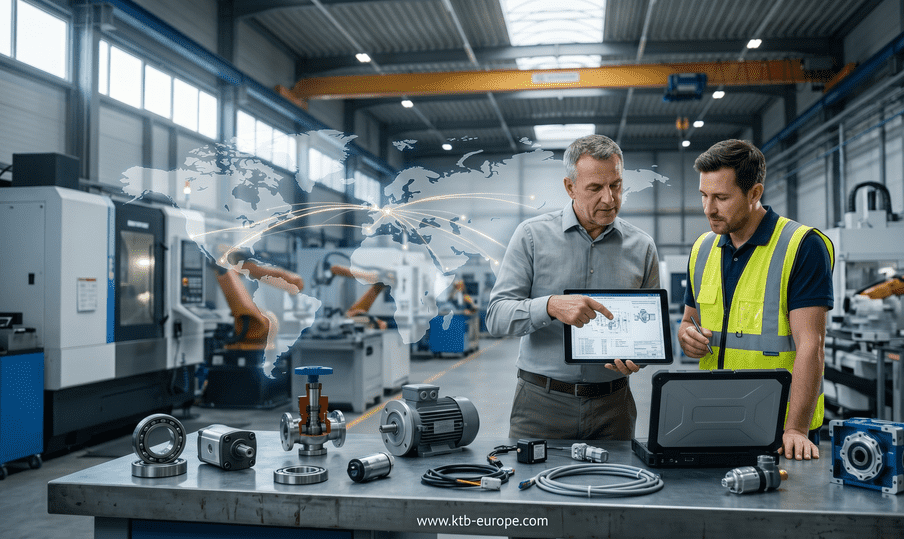
Industrial procurement rarely attracts attention when everything works as expected. Production lines move smoothly, maintenance schedules stay on track, and replacement components arrive before anyone notices a potential problem. The real challenge emerges when a critical part becomes difficult to source, communication breaks down between suppliers, or maintenance teams are forced to navigate a maze of disconnected vendor relationships during an urgent operational situation. Companies evaluating the leading mro companies in usa are often searching for more than access to industrial parts—they need sourcing partners capable of simplifying global procurement, coordinating technical communication, and protecting operational continuity when equipment reliability is on the line.
Many manufacturing facilities across North America continue to rely on fragmented sourcing models built over years of supplier additions and operational expansion. While this approach may appear manageable on the surface, it often creates hidden vulnerabilities. Information becomes scattered. Technical clarification takes longer than expected. Procurement departments spend valuable time coordinating suppliers instead of focusing on strategic priorities.
The organizations that consistently maintain operational continuity understand a simple truth: procurement efficiency is often determined long before a replacement component is needed.
The Hidden Risks of Decentralized Sourcing
A decentralized sourcing structure creates complexity in places where precision matters most.
Maintenance teams may work with one supplier for mechanical components, another for electrical systems, and several additional contacts for specialized equipment. Each supplier operates through different communication channels, documentation standards, and response procedures.
As facilities grow, these disconnected relationships become increasingly difficult to manage.
Questions about technical compatibility can bounce between multiple organizations. Procurement departments may find themselves repeating the same information across separate conversations. Valuable time disappears while teams attempt to coordinate responses from various contacts located across different regions.
Today, the most effective mro companies in usa operate beyond traditional catalog distribution, functioning instead as strategic supply chain architects that consolidate global procurement.
That distinction changes everything.
Rather than forcing buyers to manage complexity independently, modern procurement organizations simplify supplier engagement, technical communication, and sourcing coordination through a centralized structure designed to support operational reliability.
Engineering a Frictionless Global Network
North American manufacturers frequently depend on equipment built by highly specialized European original equipment manufacturers.
These relationships deliver access to advanced engineering capabilities and specialized industrial technologies. They also introduce procurement challenges that become more noticeable when maintenance requirements become urgent.
Time differences often create the first obstacle.
A technical question raised during a maintenance review may require communication with engineering teams located several hours ahead. What appears to be a straightforward request can quickly evolve into a prolonged exchange involving technical documentation, product verification, and specification clarification.
Engineering language introduces another layer of complexity.
Industrial equipment frequently includes highly detailed schematics, manufacturer-specific terminology, and technical references that require careful interpretation. Even experienced procurement professionals can encounter challenges when translating operational requirements into manufacturer-specific documentation.
Then comes supplier coordination.
Facilities sourcing components from multiple manufacturers often find themselves communicating with numerous contacts simultaneously. The process becomes increasingly demanding as procurement teams attempt to track conversations, technical updates, and sourcing progress across a fragmented supplier network.
The issue is rarely product availability.
The issue is managing information efficiently enough to ensure that sourcing activities support operational continuity rather than disrupt it.
Transforming Operations Through Centralized Support
The most effective procurement strategies are built around coordination.
When sourcing activities are centralized through a dedicated procurement infrastructure, communication becomes more efficient, technical verification becomes more reliable, and maintenance teams gain access to a streamlined support structure.
This approach fundamentally changes how procurement operates.
Instead of contacting multiple suppliers individually, organizations work through a single point of contact capable of coordinating manufacturer engagement, technical clarification, sourcing requests, and supplier communication.
The benefits extend far beyond convenience.
A centralized procurement structure acts as an intelligent extension of the buyer's own maintenance and purchasing teams. Technical questions are routed through experienced professionals. Supplier communication becomes more organized. Procurement departments gain greater visibility into sourcing activities without becoming overwhelmed by administrative complexity.
The result is a smoother operational experience.
Maintenance teams remain focused on equipment performance while procurement specialists manage the complexities of international sourcing behind the scenes.
The Critical Link Between European Engineering and American Manufacturing
Strong procurement partnerships are built on trust, experience, and the ability to connect industrial ecosystems that operate across different regions.
Organizations with deep roots in international sourcing often possess an advantage that newer market entrants struggle to replicate. Experience creates relationships. Relationships create efficiency. Efficiency supports operational reliability.
KTB Europe represents this model through a family-owned heritage dating back to 1976 and a long-standing commitment to connecting industrial buyers with specialized manufacturers throughout Europe and beyond.
For North American facilities, this creates a meaningful advantage.
When operations directors leverage a sophisticated global industrial parts sourcing hub, they bypass many of the traditional bottlenecks associated with fragmented supplier communication and disconnected procurement processes.
The value is not simply access.
The value comes from coordination, technical understanding, and the ability to bridge the gap between European engineering expertise and American manufacturing requirements.
Similarly, facilities that centralize maintenance strategies through a dedicated international procurement and engineering partner gain access to a procurement framework designed around operational continuity rather than transactional purchasing.
This evolution reflects a broader shift across the industrial sector.
Procurement is increasingly viewed as a strategic function capable of strengthening resilience, improving responsiveness, and supporting long-term operational objectives.
That shift explains why leading mro companies in usa continue moving toward integrated sourcing models that prioritize communication, expertise, and supplier coordination.
Securing Uptime in an Unpredictable Market
Manufacturing environments rarely remain static.
Equipment evolves. Production requirements change. Supplier ecosystems become increasingly interconnected. Procurement strategies must adapt accordingly.
The organizations best positioned for long-term success are those that recognize procurement as more than a purchasing activity. They understand that sourcing efficiency influences maintenance performance, operational continuity, and overall plant reliability.
A strong procurement partner helps reduce uncertainty.
It creates a structured framework through which technical questions are resolved, supplier communication is managed, and sourcing activities remain aligned with operational objectives.
Most importantly, it allows maintenance and operations teams to focus on what they do best: keeping production moving.
As industrial supply chains continue to become more complex, the value of globally connected procurement expertise will only continue to grow.
Facilities that invest in those relationships today are building a stronger foundation for tomorrow.
Frequently Asked Questions
What are MRO companies?
MRO companies support maintenance, repair, and operations activities by helping industrial facilities source replacement parts, technical components, and procurement solutions that support equipment reliability and operational continuity.
Why do North American manufacturers source components from Europe?
Many manufacturers rely on European original equipment manufacturers because they produce specialized industrial equipment, engineered systems, and technical components used throughout global manufacturing operations.
What challenges arise when sourcing industrial components internationally?
Common challenges include communication delays, technical specification clarification, supplier coordination, documentation management, and maintaining visibility across multiple sourcing activities.
How does centralized procurement improve operational performance?
Centralized procurement simplifies supplier communication, improves technical coordination, reduces administrative complexity, and creates a more efficient sourcing process for maintenance and purchasing teams.
Why is a single point of contact valuable in industrial procurement?
A single point of contact reduces communication errors, streamlines sourcing activities, coordinates manufacturer engagement, and provides procurement teams with greater visibility throughout the sourcing process.
What should companies look for in a long-term procurement partner?
Organizations should seek procurement partners with strong supplier networks, international sourcing expertise, technical knowledge, centralized communication processes, and a proven ability to support operational continuity.
Conclusion
Industrial procurement has evolved beyond the traditional role of supplier management. Modern manufacturing facilities require sourcing partners capable of coordinating technical expertise, supplier relationships, and global communication through a structured and reliable framework.
The most successful organizations understand that operational continuity depends on more than product access. It depends on the systems, relationships, and expertise that support procurement decisions every day.
By partnering with globally connected organizations such as KTB Europe, manufacturers gain access to procurement infrastructure designed to simplify complexity, improve coordination, and strengthen long-term resilience. In a market where uptime remains one of the most valuable operational objectives, that capability becomes a strategic advantage that extends far beyond sourcing alone.